A simple AI-generated image outperformed all other ads. Here’s the lesson on how to spot a "code" and productize it instantly.
In digital marketing, we’re all just one "code" away from a breakthrough.
We test ads, headlines, and images, looking for that one combination that just works. This week, Entourage Mastermind member Stuart found one, and it’s a brilliant lesson for all of us.
While Chad was testing six different ad creatives, some getting leads for $15 before being optimized down to $1, Stuart jumped in and shared a brand new creative he was testing.
His results? 19-cent clicks to his newsletter signup page.
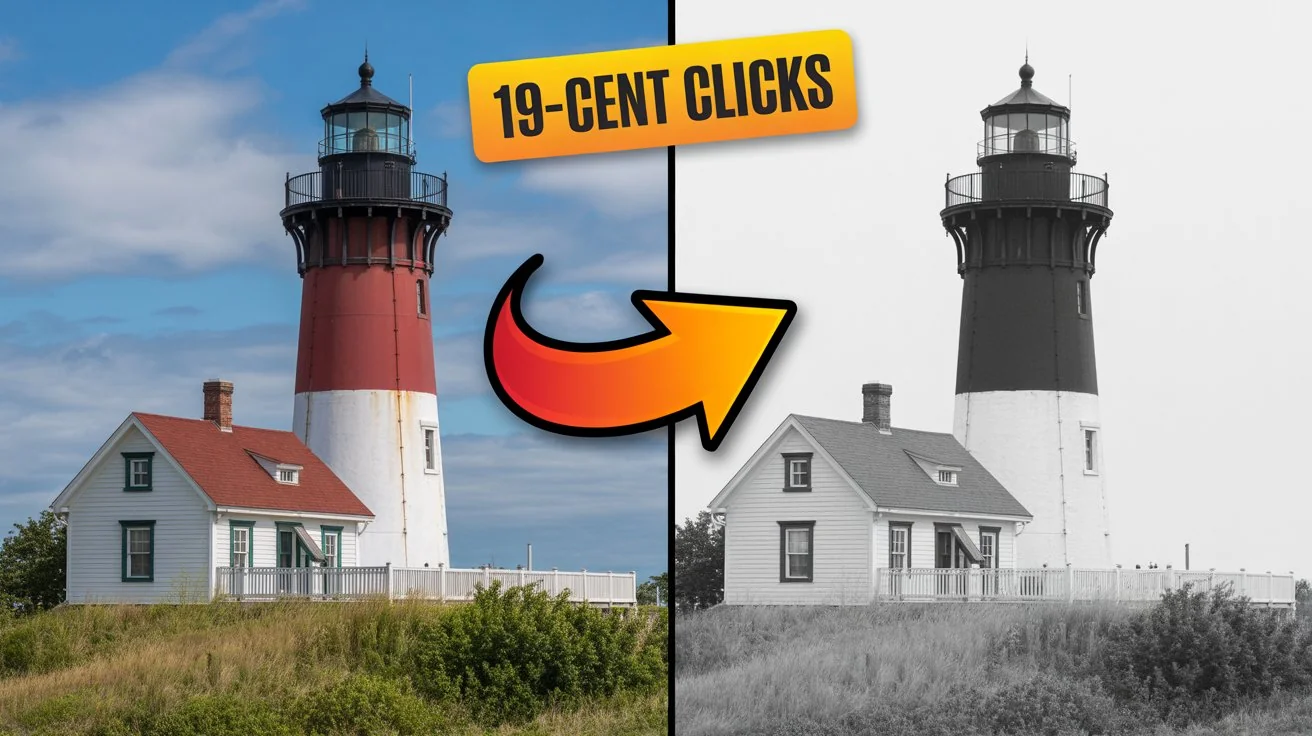
His secret? A simple, AI-generated "pencil drawing" of a local landmark.
Why the "Pencil Drawing" Ad Works
Stuart took a normal photo of a local lighthouse and used AI (like Gemini or ChatGPT) to transform it into a "pencil drawing." He then used that sketch as his ad creative.
The result was immediate and powerful. While a 19-cent click isn't a 19-cent lead, his conversion rate on the landing page was so high that his cost per lead was still incredibly low (around 40 cents).
When combined with co-registration, his final cost dropped to nearly 10 cents per subscriber.
So, why did it work so well?
- It's "Pattern Interrupt": It looks different from every other ad. On a feed full of glossy photos and videos, a simple, elegant sketch stands out and stops the scroll.
- It's "Hyper-Local": It wasn't just any sketch; it was a sketch of a landmark that only locals would recognize. It instantly builds a connection and signals that the newsletter is authentically local.
- It's "Curiosity-Driven": The art-style creates curiosity. "What is this?" "Who made this?" "Why is there a sketch of the lighthouse?" That curiosity drives the click.
Chad's Hilarious Failure (And Why It Matters)
The moment he saw Stuart's results, Chad did what all good marketers do: he immediately tried to copy it.
He took the main photo for the Summerlin newsletter, ran it through AI, and generated his own pencil drawing. He launched the ad, excited to show his significant other, Connyjo.
Her response? "What the hell is that?"
The AI, in its infinite wisdom, had added a giant bridge and a building that looked like it was from India. As Conny pointed out, "Chad, we don't have a bridge."
She told him to shut the ad off immediately, knowing the local audience would "call him out" on the fake landmark.
The lesson is simple: Stuart's ad worked because it was authentic. The tactic (a pencil drawing) is powerful, but it must be paired with true local knowledge.
Don't Just Find a "Trick", Build a "Method"
Here is the most important takeaway from this story.
Stuart didn't just find a "trick." He "cracked the code" to something bigger.
Chad's immediate reaction was to see it as a "system, process, method, strategy, secret, or formula." This is a product.
He immediately opened Offermint and started to productize it.
He created a new product outline called the "Local AI Lead Method" that would teach this exact strategy.
He used Offermint to generate the name, the course modules (like "Crafting Your Local AI Ad" and "AI for Budget Optimization"), and the branding.
This is the mindset that separates hobbyists from entrepreneurs.
When you find something that works, don't just use it. Productize it.
That 19-cent-click "trick" instantly becomes:
- A $47 bump offer.
- A $97 mini-course.
- A free workshop to generate leads for your high-ticket coaching.
- A new module inside your existing membership.
The Titanium software suite is designed for this. You can use Offermint to flesh out the idea, use Course Sprout to host the training video, and use Mintbird to sell it as a bump offer, all in one afternoon.
So, as you test your own ads, pay attention. You might be one creative away from "cracking the code" yourself.
When you find it, don't just scale it. Sell it.

0 Comments
Join the conversation
Be the first to comment
Share your thoughts above.