Why does featuring individual shelter animals protect our weekly email delivery rates?
We receive an immediate lift in our sender status because custom animal features generate a massive wave of real human clicks and email replies from our readers.
This immediate user engagement acts just like a clean driving record for our mailing domain, proving to providers like Google that our messages are highly wanted by the community.
The back-end plumbing behind modern spam filters prioritizes how our audience interacts with our content over any server configuration or hidden code settings.
When a local subscriber opens our weekly message and clicks an embedded link, it sends an undeniable signal that keeps our upcoming issues out of the promotions tab.
What this unlocks is a reliable way to warm up our mailing systems using pure community goodwill rather than dry advertising text.
Chad pointed out during our sessions that adding these profiles creates an active group of true fans who regularly look for our sends.
Our publication gains a high reputation score with major email servers, ensuring our business communications consistently land in the primary inbox.
Instead of leaving our delivery success to random algorithms, we use consistent human clicks to protect our automated system placement.
Every single interaction from an animal lover in our town acts as a digital shield that keeps our business visible to our entire list.
This local list building strategy protects our sender profile from getting flagged when we send out regular community news.
We can maintain a highly reliable relationship with the major networks because real people are actively engaging with our weekly updates.
The increased interaction creates an authority shield over our domain, which keeps our future messages safely out of the bulk folder.
Our email sender reputation stays completely clean because the email servers see our town opening our content at record rates.
How do we choose the specific animal profiles to maximize our community engagement?
We extract raw data profiles from our local shelter web pages, focusing entirely on specific animals that are having the hardest time getting adopted.
This selection strategy gives our updates deep emotional weight because we highlight dogs like senior pets or pit bulls that are running out of time.
Conny uses this exact list logic for our local publication to find rescue animals facing immediate deadlines at the local pound.
Here's what changes for our content creation: we completely drop the old method of posting general summaries about the shelter organization as a whole.
A broad cause statement usually reads like a corporate advertisement, causing our local audience to glance past our text without clicking anything.
The practical impact of showcasing one single face is that our message feels like a personal check-in from a helpful neighbor.
We take the raw text details from the shelter site and feed them directly into our ChatGPT workspace to create a short, moving narrative.
We instruct the app to write a clean, low-pressure story about the dog's personality, detailing their age, temperament, and habits.
If the dog faces a specific deadline at the pound, we make sure to place that exact date in bold text right at the top of our layout.
This simple addition creates an immediate sense of urgency that forces our neighborhood subscribers to share the email with their friends.
This system gives us an effortless way to create expert-level content, as the tool handles the writing while we maintain the strategic direction.
Our readers develop a genuine bond with our newsletter layout because they see our publication actively working to help our town's animals.
By sharing the exact adoption status and waving the fees, we create a high-value community piece that readers share with their own networks.
This process naturally flushes out the most compassionate community members who are highly likely to support our local brand for years.
What is the exact layout configuration we use inside Letterman for these features?
We set our animal spotlight images to exactly half-size within our publishing cells to keep our weekly template perfectly balanced.
This precise sizing rule prevents our images from overwhelming the page layout when neighbors open our newsletter on their mobile phone screens.
We want our layout to stay perfectly clean and scannable, so keeping our visual items compact ensures our readers can browse our text without endless scrolling.
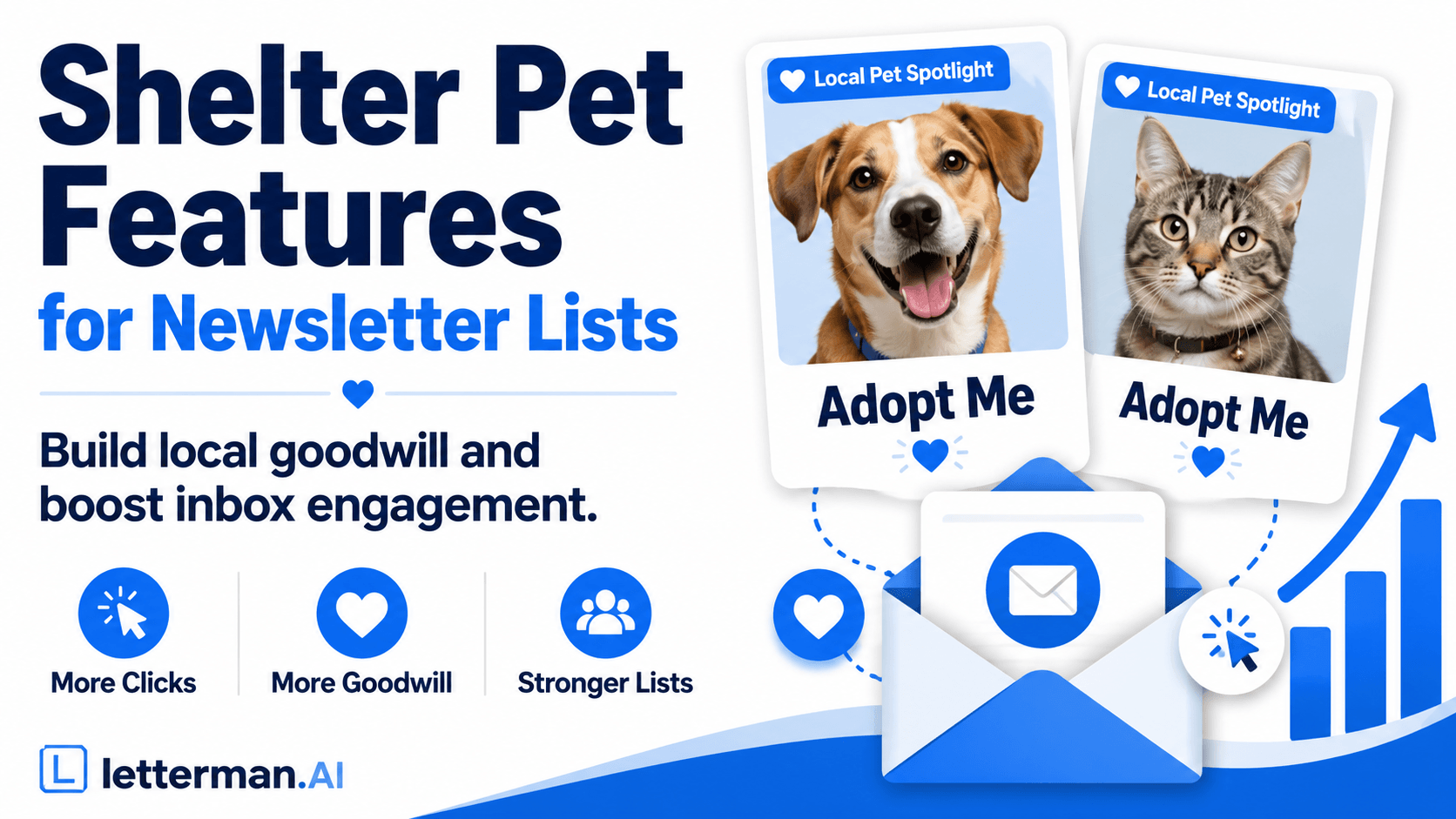
What this unlocks is the ability to display two different animal cards side-by-side, like placing an adoptable puppy spotlight right next to a local cat update.
We construct these clean visual blocks by typing our image generation commands straight into the same ChatGPT thread we use for our text.
We type a clear instruction into our town project thread: "Create a beautiful image for an adoptable dog, make it half-size on a clean white background." We enforce the white background protocol because it allows the graphic edges to blend flawlessly into the native cells of our Letterman builder.
This design choice functions just like invisible caulking on a baseboard, hiding the rough borders of our photo so it looks like it was custom-coded for our template.
The back-end rendering code inside Letterman locks the image dimensions in place across every screen size.
This means we can display highly professional local news layouts without any text distortion or design errors.
Our letterman newsletter traffic climbs because the visual presentation matches the quality of a major regional media network.
We drop the old way of using complex editing platforms and let the chat app build clean graphics that keep our design costs at zero.
This layout change gives our local business sponsors immediate proof that we manage a high-end publication that draws professional eyeballs.
Why should we link our feature images to a dedicated standalone page instead of the general pound website?
We connect our newsletter images to a single-purpose page built for that individual animal to protect our visitors from severe decision fatigue.
This direct connection keeps our potential adopters focused on one clear outcome instead of getting lost inside a massive online directory.
If we make the mistake of routing our local traffic straight to a massive shelter database, our readers land on a cluttered portal showing hundreds of pets.
They immediately feel overwhelmed by too many choices, experience mental fatigue, and close the browser window without taking action.
This single-focus link path acts like a clean, direct signpost pointing to one specific shop door on a main street, keeping our visitors on a clear track.
We build this dedicated destination using a custom Page Sprout landing page, where we display the animal's full story and a clean registration box.
This means we can rank that individual landing page on search engines using our localized keywords, drawing fresh community traffic from Google searches.
Our publication looks like a premier media company because we provide a seamless, premium digital experience for our local neighbors.
We can use this heightened authority to show our local business clients that we control the digital attention inside our hometown area.
This creates an immediate opening to offer high-ticket sponsorship packages to serious professionals who have established marketing budgets.
Our content asset creation strategy ensures that every page we build stays live on the web to collect long-term search traffic.
How does this goodwill strategy automate our customer lead tracking inside Global Control?
Our landing pages connect directly to our Global Control database so that every reader interaction is tracked and filed autonomously.
This back-end connection completely removes the tedious labor of trying to track our link clicks on messy spreadsheets at the end of the week.
The exact second a local neighbor clicks our Letterman image link to read more about a pet, our software applies a precise tracking tag to their profile.
An API handshake acts exactly like a digital waiter carrying our visitor's data cards straight to the kitchen backend without them leaving their seats.
Global Control functions like our automated administrative assistant, sorting our incoming leads into clean, organized buckets based on their real actions.
This automated tag action functions just like a physical sorting room where incoming envelopes get stamped and dropped into the correct bins automatically.
We can instantly identify which local subscribers are animal lovers, allowing us to send them targeted updates that keep our open rates high.
We can drop a quick digital survey from Quizforma right onto our thank-you page to ask our readers if they own a local business or if they want to sponsor a town event.
This data strategy reveals the true demographics of our audience, giving us the power to approach local shop owners with concrete proof of our reach.
We can cross-reference our past list setups inside our systems to see how we align our automated pipelines with our weekly publishing routine.
We can also look back at our recent hometown ad strategy to see how we use these same automated systems to build our core subscription lists for pennies.
Let's ensure our weekly layouts are completely optimized by checking our dashboard settings to keep our tracking tags completely optimized today.

0 Comments
Join the conversation
Be the first to comment
Share your thoughts above.