h2>How do we protect our monthly operating budget from unpredictable AI token fees?
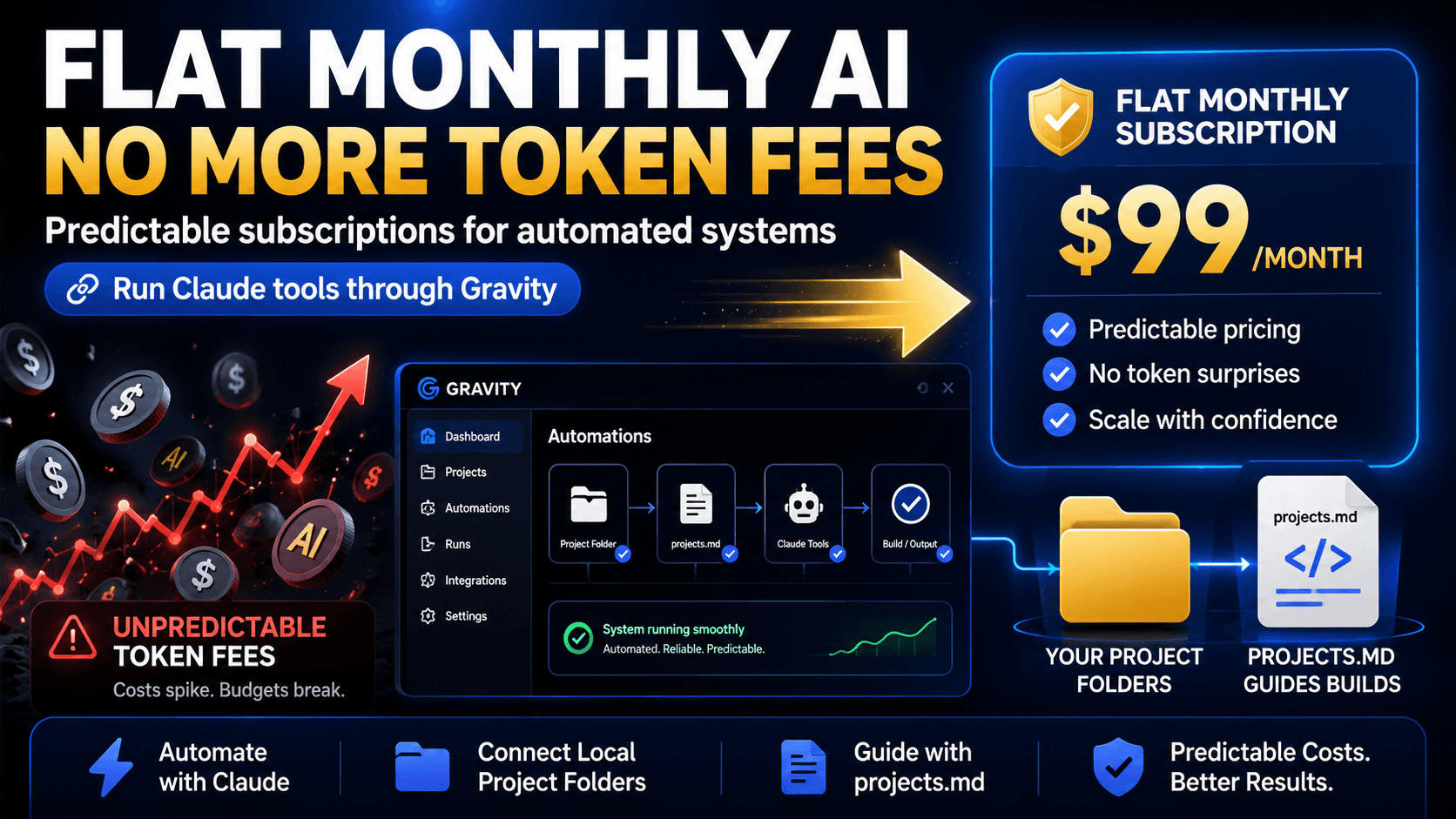
We protect our monthly operating budget by switching from variable pay-per-message tokens to fixed monthly system subscriptions.
This update ends the confusion of fluctuating bills by giving us a set rate for our daily back-end tasks.
The practical impact is we can test advanced scripts and build complex pages without watching our account balance drop every time our systems communicate.
Instead of pre-funding technical developer setups that freeze mid-task when credits run dry, we now use a regular flat-rate system plan.
A flat monthly plan via the Gravity platform functions like an extension cord that lets us plug our electric saws right into the main wall socket, drawing a steady stream of power for one set price instead of buying expensive single-use batteries for every single cut we make on the job.
Why this matters now is the Devs integrated this setup directly into our workspace routines to secure a predictable monthly system fee.
What is the purpose of the Gravity interface when using our flat system subscriptions?
The Gravity interface acts as a clean control dashboard that connects our flat-rate subscription directly to our local project folders.
Here's what changes on our screen: we run advanced programs like Claude Code or Claude Design right inside our local directories without accessing confusing developer command spaces.
This clean connection means our systems can build responsive digital components and update database registries safely behind the scenes.
Chad explained that using this direct interface prevents the system errors and weird text glitches we recently faced with un-optimized chat channels.
What this unlocks is total freedom to run multi-step design updates throughout the day for a flat twenty dollars a month.
What literal steps do we follow to instruct flat-rate software tools to handle our back-end labor?
We write a structured project text document saved as a markdown file to pass complete build instructions to our system.
We create a file named projects.md that outlines our exact page steps, user authentication screens, and backend communication rules in plain text.
The screen immediately displays the software agent reading our file and setting up our directories automatically.
This methodology allows non-technical business owners to guide automated builders without writing code or learning programming rules.
Next, we can connect our data streams to our central contact tags inside Global Control to track our progress automatically.
This structural consistency protects our business from unexpected software shifts as we scale up our coordinated local media.

0 Comments
Join the conversation
Be the first to comment
Share your thoughts above.